
What Is Neurodivergent Burnout? Why It's Different and How to Recognise It
Burnout is finally being talked about more, but we know that burnout from being neurodivergent hits differently. If you haven’t heard of it, you’ve most likely experienced it. However, so many of us still don't recognise it until we're already deep in it. I know because that was me.

Looking back now, I can see the signs were there for a long time. At the time though, I thought I was just stressed, overwhelmed and needed to push through. That’s life right?
What I didn't realise was that my mind and body had been trying to tell me for months that something needed to change and ultimately, it was going to do it for me.
This blog covers why neurodivergent burnout is different and what you need to understand as an ADHD, Autistic, AuDHD, Dyslexic, adult or any other neurotype where living in a world that wasn’t designed for you is tough.
In part two I will be exploring more about what I did and what I know helps my clients and other neurodivergent adults to work through burnout and reduce it for the future.
What is Burnout?
Burnout is more than feeling tired after a busy week. It is physical, mental and emotional exhaustion that builds up over time. It often happens when stress has been present for so long that we no longer have the energy or resources to cope in the same way.
Burnout can affect every part of life. It can impact our work, relationships, physical health and overall wellbeing.
Common signs of burnout include:
Feeling exhausted, even after rest
Struggling to concentrate or make decisions
Feeling overwhelmed by everyday tasks
Losing motivation
Becoming more emotional or irritable
Withdrawing from people
Physical symptoms such as headaches, pain or digestive issues
Feeling disconnected from yourself or the things you usually enjoy
Burnout doesn't happen overnight. It often builds slowly over months or even years.
In neurodivergent brains (including ADHD and Autism), this communication can work differently:
Signals between brain networks may be less efficient or more variable
Dopamine regulation (linked to motivation, reward, and focus) can function differently
Regulation and organisation systems may develop on a different timeline
Research and clinical observations suggest that there can be around a 30% delay in executive functioning compared to neurotypical (not neurodivergent) development.
This does not mean anything is missing or broken, it simply reflects differences in timing, regulation, and brain connectivity.

What is Neurodivergent Burnout?
While anyone can experience burnout, neurodivergent people often face additional challenges which can increase the risk of burning out.
This includes people (adults and children!) with ADHD, autism, AuDHD, dyslexia and other neurodevelopmental differences. It can also resonate with people who experience similar challenges, such as sensory sensitivity or other long-term cognitive and mental health differences.
For many of us, life can involve:
Managing executive functioning difficulties
Coping with sensory overload
Masking or hiding parts of ourselves
Constantly trying to meet expectations
Working harder to keep up
People-pleasing and fear of letting others down
Ignoring our own needs
Over time, this can become exhausting. Neurodivergent burnout isn't simply about doing too much. Sometimes it's about spending years trying to survive in environments and systems that don't work with our brains..
Stress, Burnout, Anxiety and Depression: What's the Difference?
These words are often used interchangeably, but they're not the same thing and it's possible to experience more than one at the same time.
Stress is our body's response to pressure or demands. Short periods of stress can actually help us get things done, but when stress becomes chronic and there is no opportunity to recover, it can eventually lead to burnout.
Burnout is what can happen when we have been under prolonged stress for too long. Rather than feeling worried or busy, burnout often feels like you have nothing left in the tank. Everyday tasks become difficult, motivation disappears and even things you enjoy can feel exhausting. You may feel physically, mentally and emotionally drained.
Anxiety is often driven by fear, worry or a sense that something bad might happen. It can show up as racing thoughts, feeling on edge, panic, overthinking or struggling to relax. Anxiety can contribute to burnout, and burnout can make anxiety worse.
Depression is more than feeling sad. It can involve hopelessness, numbness, low mood, loss of interest in life and feelings that things won't get better. Some people experience depression alongside burnout, especially if they have been pushing through for a long time.
For me, chronic stress led to burnout and burnout eventually contributed to depression. While these experiences overlap, understanding the difference can help us recognise what support we may need and remind us that struggling doesn't mean we've failed.
My Experience of Burnout
It’s only been in recent years that I realised I have had multiple neurodivergent burnouts. I thought they were depression episodes, however, now knowing the difference I realised it was a build-up of chronic stress and exhaustion, leading to burnout which then came with depression.
My last big burnout was back in 2023 I found myself trying to juggle running my business, being a mum and working a part-time job and everything else that comes with life.
I was also learning more about ADHD and beginning to understand how much it had affected my life. I was starting to unmask and uncover years of struggles I hadn't fully recognised before.
I was exhausted, but I kept pushing. Like many people, slowing down didn't feel realistic. There were bills to pay, clients to support, children to raise, and so many other things. Life doesn't simply stop because you're struggling.
Eventually, what started as burnout became depression. It took breaking down to my husband and admitting that I couldn't carry on like this for me to realise something had to change.

Why Slowing Down Felt Impossible
One thing I want to be honest about is that ‘just rest’ isn't always realistic advice. When you're self-employed, have a family, responsibilities and financial pressures, taking a step back can feel impossible.
Leaving my part-time job affected us financially and I was in a privileged position to be able to do so, it wasn’t easy, it was hard!
I had to reduce my clients, cancel meetings, step back from most things business to reduce demands as much as I possibly could.
You can’t just get rid of your kids though, so I had to ask for help where I could, I had to try and explain to my children what was going. It felt uncomfortable but it was necessary.
But I've learnt that burnout has a way of forcing the issue. I was feeling pain all over my body and was extremely tired all the time. The type of tired where you could fall asleep standing up! Turns out, in Jan 2024 I was diagnosed with Fibromyalgia.
How I Recognise Burnout
Looking back, I can now clearly see the signs that I was heading towards burnout. At the time, I didn't recognise them. I thought I was simply tired, stressed or overwhelmed and that I just needed to keep pushing through.
Now I know these are my warning signs:
Everyday tasks start feeling much harder than they should like brushing my teeth
My executive functioning becomes worse
I struggle to make decisions and can feel paralysed in trying to do anything
I stop enjoying things I would normally love, I begin to withdraw and lose motivation
My fibromyalgia symptoms flare up and my body feels like it's carrying constant stress
Self-care starts slipping because it feels like too much effort
I've learnt to see these as warning lights rather than signs that I've failed. They're my body's way of telling me that I need to slow down, reduce demands where I can and ask for support before I reach complete burnout again.
If any of this feels familiar, I want you to know that you're not alone. Burnout doesn't mean you're lazy or that you’ve failed. Often, it means you've been carrying too much for too long.
Understanding burnout taught me a lot about myself. It taught me that rest isn't something I have to earn, that understanding my needs matters, and perhaps most importantly, it taught me that pushing through isn't always the answer.
In my next blog, I'll share what burnout taught me, the neurodivergent burnout cycle, the triggers I now recognise and what I do differently to support myself before reaching crisis point.
Ready to Break the Burnout Cycle?
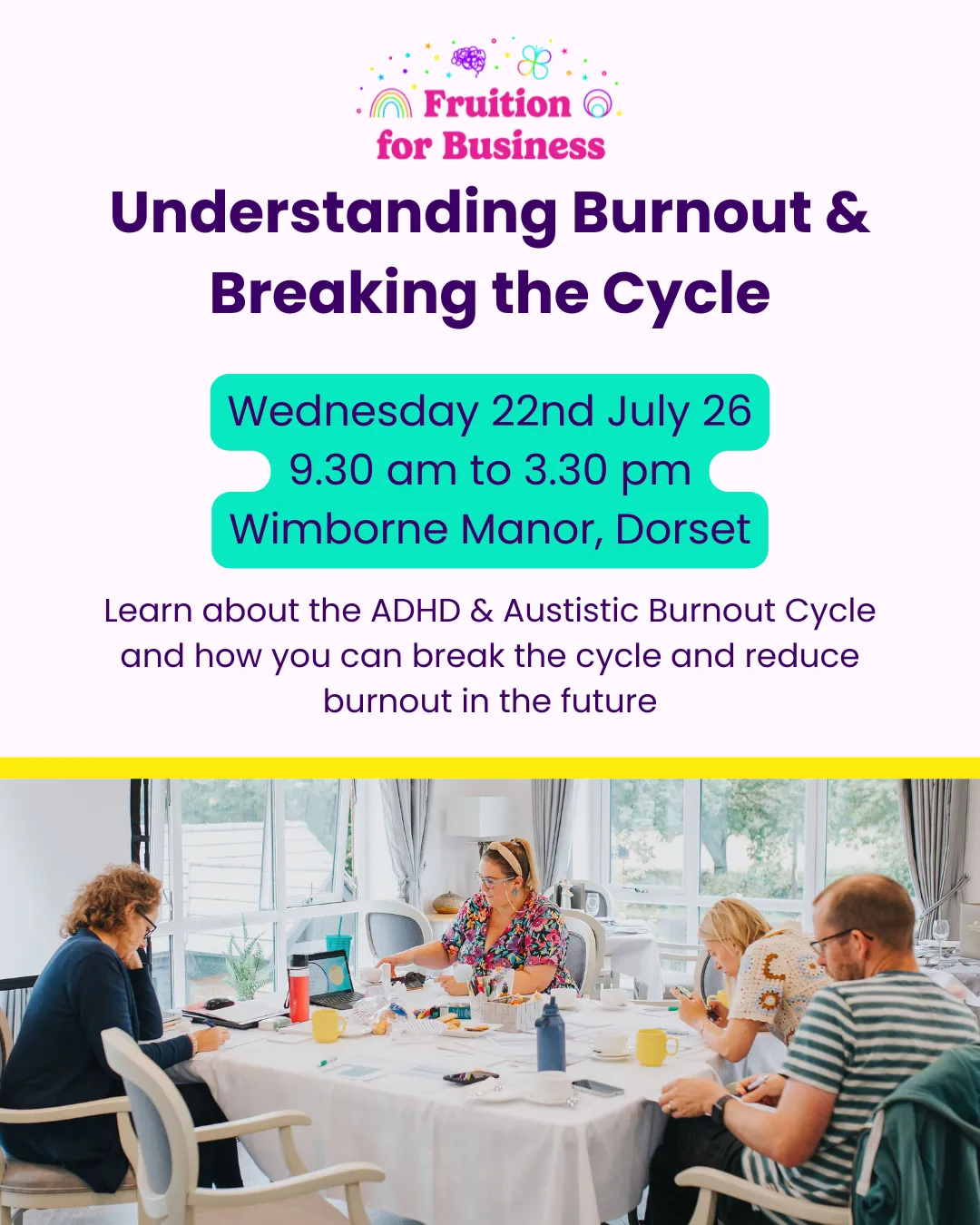
If you recognised yourself in this blog, please know you're not alone. Understanding what's happening in your brain is often the first step towards making meaningful, lasting changes. You don't have to keep pushing through until you reach burnout again.
Join me for: Understanding Burnout & Breaking the Cycle
📅 Wednesday 22nd July
🕤 9.30am - 3.30pm
📍 Wimborne Manor, Dorset
☕ Includes refreshments, snacks, lunch, workbook and a little gift
During this interactive workshop you'll learn:
Why ADHD and autistic burnout is different from general burnout
How the neurodivergent burnout cycle develops
Practical strategies to reduce overwhelm and prevent future burnout
How to work with your brain instead of constantly fighting against it
Whether you're currently experiencing burnout or want to prevent it from happening again, this workshop will give you a deeper understanding of your brain and practical tools you can start using straight away.
Knowing what you need to do, but struggling to initiate it
Feeling overwhelmed by simple or multi-step tasks
Losing track of time or switching tasks becomes difficult
Emotional reactions feel stronger or harder to regulate than expected
Not sure what's right for you?
If you'd like to talk through your situation first, book a free Connection Call and we can explore the best next step together.