ADHD 101: Understanding The Basics
ADHD stands for Attention Deficit Hyperactivity Disorder. It’s a neurodevelopmental condition that affects attention, activity levels, impulse control, and more. What we do know is that it affects every aspect of our lives, EVERY DAY!
We’re talking about ADHD more than ever. But what does ADHD look like in diagnostic terms and in real life!

Executive functions are often described as the operating system of your brain. Imagine your brain like a computer; executive functions are the background system that keeps everything running, organising files, managing tasks, allocating attention, and helping you switch between programs smoothly.
When this system is working well, life feels more manageable. You can plan, start tasks, switch focus, and regulate emotions with more ease.
When it’s not working efficiently, everything can feel slower, heavier, or harder to coordinate, even when you know what needs to be done.
Executive functions are primarily managed by the prefrontal cortex, the front part of the brain that contributes towards our behaviours, managing emotions and cognitive processing. This may look like decision-making, planning, prioritising, emotional regulation, etc.
This system doesn’t work alone. It relies on communication between different brain networks, including those involved in emotion, memory, and reward.
ADHD was originally only recognised in children but we now know it continues throughout adulthood. Some people aren’t diagnosed until much later. It often runs in families, with genetic factors playing a significant role in its development.
NHS England’s August 2026 publication estimated that around 2.5 million people in England have ADHD, including those without a diagnosis. It also reported up to 959,662 open referrals that may be for an ADHD assessment in June 2026.
But living with ADHD involves much more than being distracted, hyperactive or forgetful. It can affect how you manage everyday tasks, relationships, work and energy.
How is ADHD diagnosed?
The Diagnostic and Statistical Manual of Mental Disorders (DSM-5) groups ADHD symptoms into three categories: inattention, hyperactivity and impulsivity.
The symptom threshold is six or more symptoms within a category for children aged 16 and under, or five or more for people aged 17 and over.
Diagnosis involves more than counting symptoms. They must:
🔴Have persisted for at least six months
🟠Be inconsistent with the person’s developmental level
🟡Include several symptoms present before age 12
🟢Occur in two or more settings, such as home, work or school
🔵Interfere with everyday functioning
🟣Not be better explained by another mental disorder
An appropriately qualified healthcare professional considers these criteria alongside a full clinical and developmental assessment.
The Three Presentations of ADHD
In neurodivergent brains (including ADHD and Autism), this communication can work differently:
Signals between brain networks may be less efficient or more variable
Dopamine regulation (linked to motivation, reward, and focus) can function differently
Regulation and organisation systems may develop on a different timeline
Research and clinical observations suggest that there can be around a 30% delay in executive functioning compared to neurotypical (not neurodivergent) development.
This does not mean anything is missing or broken, it simply reflects differences in timing, regulation, and brain connectivity.
Depending on which criteria someone meets, ADHD is described as one of three presentations:
🟣Predominantly inattentive: difficulties with attention, organisation, forgetfulness and following through on tasks.
🟢Predominantly hyperactive-impulsive: restlessness, interrupting, acting without thinking or finding it difficult to wait.
🟠Combined: meeting the symptom thresholds for both categories.
REMEMBER: Hyperactivity doesn't always mean physically running around. For some, it can feel more like an internal sense of restlessness or a brain that never seems to switch off.
What we do know is that ADHD is genetic and research suggests that it’s heritability is up to 80% if not more, just like your hair and eye colour would be. There is not one single ‘ADHD Gene’ but many genetic factors contribute to the likelihood of ADHD alongside other developmental and environmental factors
Knowing what you need to do, but struggling to initiate it
Feeling overwhelmed by simple or multi-step tasks
Losing track of time or switching tasks becomes difficult
Emotional reactions feel stronger or harder to regulate than expected

ADHD Is More Than The Diagnostic Criteria
The diagnostic criteria help professionals identify ADHD, but it doesn't tell the whole story of what everyday life can feel like.
You might know exactly what needs doing but still feel unable to begin. Or spend hours absorbed in something you enjoy, then struggle to switch your attention when you need to.
These experiences can be confusing, especially when you’re trying hard. Understanding what’s happening can help you make sense of them.
Here are some of the top factors that impact a person with ADHD that isn't part of the diagnostic criteria that should be.
Executive functions
Executive functions are the mental skills that help us manage everyday life. It's our brain's operating system that helps with:
Planning, prioritising and organisation
Holding information in mind
Starting, finishing or switching between tasks
Estimating time and managing deadlines
Directing attention and managing impulses
Read more here on my blog all about executive functions and how they show up daily.
Emotional Regulation and Rejection Sensitivity Dysphoria
For some people with ADHD, emotions can feel intense and take time to settle. Criticism or perceived rejection may feel particularly painful known as Rejection Sensitivity Dysphoria (RSD). Read more here on my blog about RSD.
Hyperfocus
Sometimes you can become so absorbed in something interesting or rewarding that it’s difficult to stop, notice the time or move on to something else. This is often called hyperfocus.
Being able to focus deeply on one thing doesn’t mean directing your attention elsewhere is easy.
Masking and compensating
You may have developed ways to hide your difficulties or keep on top of things, even when doing so takes a huge amount of effort and energy. Other people might see someone who is organised and capable without seeing the preparation, checking or recovery time behind it.
ADHD looks different for everyone
Although these experiences aren’t part of the core diagnostic criteria, they can affect your relationships, confidence and energy.
There’s no single way to ‘look’ like you have ADHD. Your experiences, environment, and support all help shape how it affects you.
If some of this feels familiar, it may be worth exploring further. Recognising yourself in these examples doesn’t confirm ADHD, but it can be a starting point for a conversation with a qualified healthcare professional.

Finding Support That Suits You
Whether you’re exploring ADHD, waiting for an assessment or have been diagnosed for years, you don’t have to figure everything out alone.
Depending on your needs and preferences, support may include medication, psychological support, workplace adjustments, practical strategies and coaching. Connecting with people who understand can help too.
While the first port of call if you think you may have ADHD should be speaking to your GP. It doesn’t always offer the support you need or require. ADHD coaching can be life-changing when support feels limited, even from medical professionals! It offers compassionate, practical and personalised guidance from someone trained to understand the trauma that can accompany ADHD, as well as the unique ways it can affect each person’s brain, wellbeing and daily life.
Support From Me
I offer different ways to connect and find support:
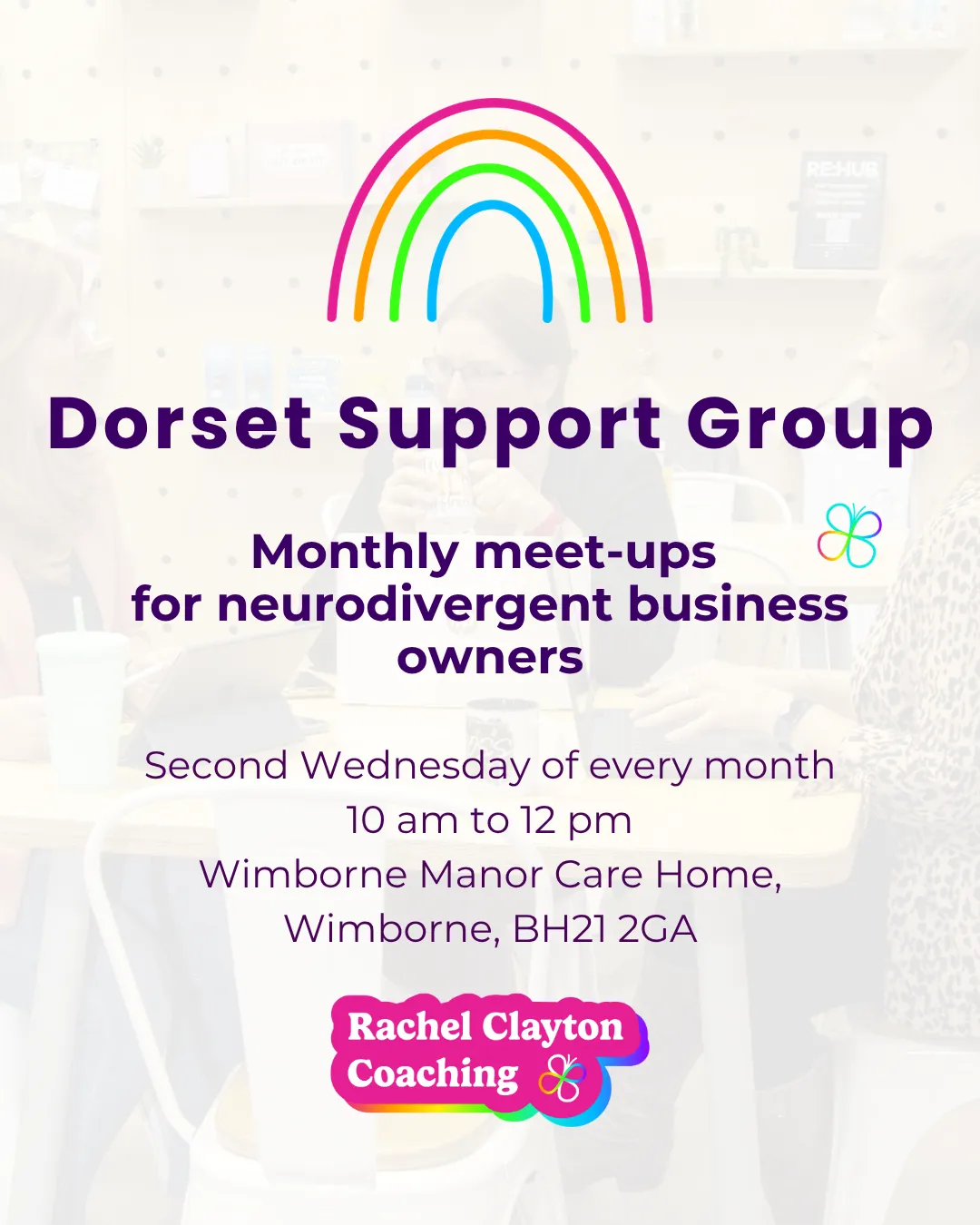
🔵Dorset Neurodivergent Business Owners Support Group: a calm space to connect, share experiences or simply listen.
🟡My Facebook community: information, resources and connection around ADHD and neurodivergence.
🔴1:1 ADHD business coaching: individual support with planning, prioritising and finding ways of working that suit you.
You don’t need to have everything figured out before asking for support. Sometimes the first step is simply finding someone who understands.